
A different starting point
Cagrilintide is a long-acting analogue of amylin. That origin places it in a different pharmacological discussion from the GIP and GLP-1 receptor activity associated with tirzepatide. The fact that two compounds appear in overlapping areas of metabolic research does not make their molecular identities or targets equivalent.
Following the development literature
The original medicinal chemistry paper, Development of Cagrilintide, a Long-Acting Amylin Analogue, describes the development of a stable, lipidated amylin analogue. It provides a useful entry into the design rationale, rather than relying on a shortened commercial name or an unsourced summary.
Read findings within the experiment that produced them. The model, material preparation and endpoint influence what a study can establish. Work involving cagrilintide alongside another compound also needs to be distinguished from work studying cagrilintide alone.
Interpreting the 10mg presentation
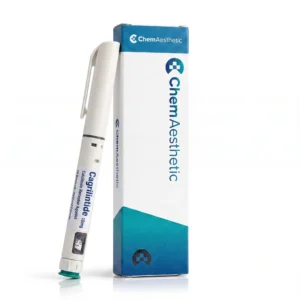
The Cagrilintide Pen 10mg page records the labelled total content and the supplied presentation. A quantity in milligrams does not establish solution concentration without volume, and it does not state a recommended use. Those distinctions prevent a container label from being mistaken for an experimental or clinical instruction.
How to compare the identity
A meaningful comparison begins with the receptor system and the question under investigation. Moving straight to a strength comparison overlooks the fact that different compounds are being measured. Our tirzepatide and cagrilintide guide sets out a framework for keeping those differences visible when reading both listings.
Where to check availability
The 10mg product listing gives the current availability alongside its specification. The article explains the terminology around it; it makes no recommendation about administration, combination protocols or treatment.
Open the corresponding pen record
Open the individual product page for the full specification, current stock and ordering options.
Take the next reading step
How to use this information
These pages explain compound terminology and catalogue records for laboratory readers. They do not establish suitability for a study or give instructions for administration to people or animals. Use the cited papers to check the context behind a scientific claim.
Purchasers must meet the legal, institutional and ethical requirements that apply to their work. Ordering confirms that the purchaser is a qualified researcher aged at least 18 and accepts the Research-Use-Only Policy and Terms of Supply.