
Begin with receptor coverage
Retatrutide and tirzepatide both feature in research involving GIP and GLP-1 receptors. Retatrutide is additionally investigated as a glucagon receptor agonist. This is a difference in pharmacological profile, rather than an extra ingredient added to a tirzepatide preparation.
| Question | Retatrutide | Tirzepatide |
|---|---|---|
| Receptor families described in the literature | GIP, GLP-1 and glucagon | GIP and GLP-1 |
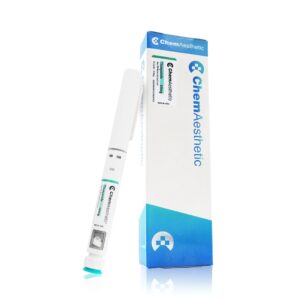
| Reference listing on this site | 40mg pen | 60mg pen |
| Availability and ordering | See the product page | See the product page |
A third target is not a ranking
Counting receptor families does not quantify a compound’s response in a particular assay. Nor does it establish equivalence, superiority or suitability for a project. The relevant comparison depends on the experimental question and the evidence used to answer it.
Compare methods alongside outcomes
The retatrutide phase 2 report and the tirzepatide SURMOUNT-1 report describe separate studies. Their results are not a head-to-head experiment merely because they are presented together on a webpage. Participants, duration, comparators and endpoint definitions must be considered before drawing a cross-study conclusion.
Why 40mg and 60mg cannot be exchanged
The numbers in the two pen titles identify labelled total quantities of different substances. They are not a conversion ratio. Even comparing concentrations would not establish matching biological activity, because identity and receptor behaviour remain different.
Keep the reading connected to the record
Use the retatrutide overview and tirzepatide overview for the individual context, then consult the product pages for their separate specifications. Check each product page for current availability and ordering information. This comparison supplies no substitution, dosing or treatment guidance.
Open the corresponding pen record
Open the individual product page for the full specification, current stock and ordering options.

Take the next reading step
How to use this information
These pages explain compound terminology and catalogue records for laboratory readers. They do not establish suitability for a study or give instructions for administration to people or animals. Use the cited papers to check the context behind a scientific claim.
Purchasers must meet the legal, institutional and ethical requirements that apply to their work. Ordering confirms that the purchaser is a qualified researcher aged at least 18 and accepts the Research-Use-Only Policy and Terms of Supply.